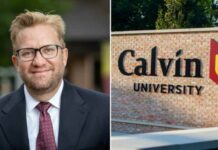
But Benkert also warns of “real risks” and a possible “slippery slope” when using critical race theory and intersectionality. That framework, he writes, “still does not provide adequate solutions to the problems it seeks to address.” Instead, he says, Christians must “seek biblical solutions to these complex issues and neither adopt the ideologies or uncritically embrace political solutions of either the right or the left.”
The SBC has long grappled with issues of racial reconciliation and social justice. The denomination, founded in the mid-19th century as a pro-slavery church, has formally apologized for that stance. Former SBC president Ronnie Floyd told Church Leaders in 2016 that churches need to lead the charge for racial unity in America. “The last place in the world where there should ever be any element of racism ought to be in the church of Jesus Christ,” he said.
The Rev. Albert Mohler, a nominee to be the next SBC president, has worked to expose previous “white racial supremacy” within the denomination’s flagship seminary. “Diversity is not an accident or a problem—it’s a sign of God’s providence and promise,” Mohler says. “If the church gets this wrong, it’s not just getting race and ethnic difference wrong. It’s getting the gospel wrong.” Critics say Mohler, who didn’t sign a controversial “Statement on Social Justice,” needs to do more to tackle the lingering issue of racism.
Ongoing division is evident in replies to the ERLC’s Twitter post about Racial Reconciliation Sunday and its bulletin about cultivating multiculturalism. Joe Charlton responded: “I live in a farming community and when they want to cultivate something you can smell it for miles in every direction.”
Brad McKeehan, meanwhile, expressed appreciation for the bulletin insert, calling it a “simple and practical reminder on how to love people that are different than you with the love of Christ.” He adds, “Division is easy to fall into (other comments show this), but being united in Christ is difficult.”
Dr. Russell Moore, president of the ERLC, has faced criticism for his response to several controversial political issues, including racial reconciliation. Speaking at a 2018 conference commemorating the Rev. Martin Luther King Jr., Moore called on pastors to speak out against racial injustice even if it’s unpopular, and he urged Christians to accept change that might feel uncomfortable.