5. Rosaria Butterfield: Changed by Hospitality, Not Argument
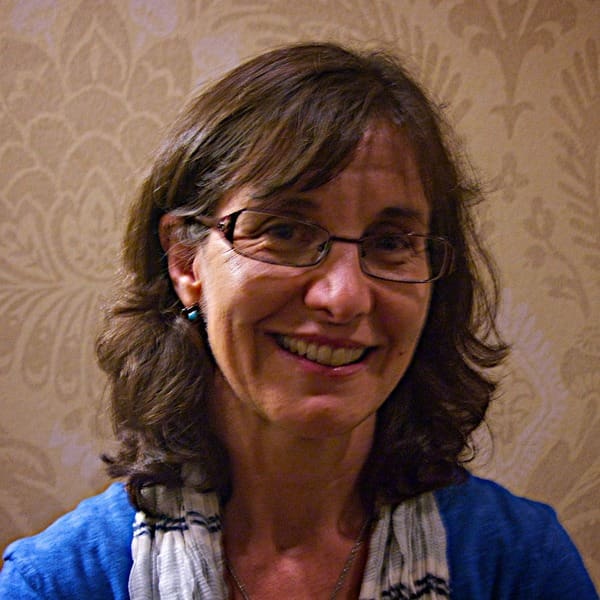
Rosaria Butterfield was a tenured professor of English and women’s studies, a lesbian activist, and a committed atheist. She began reading the Bible only to critique the religious right’s treatment of LGBTQ+ issues. It was academic research, nothing more.
What she didn’t expect was a neighboring pastor named Ken Smith and his wife Floy, who responded to her skepticism not with debate, but with dinner. They invited Butterfield into their home repeatedly, listened to her questions without flinching, and prayed for her quietly and consistently. Over time, God rebuilt her from the inside out.
In “The Secret Thoughts of an Unlikely Convert,” describes conversion as something that “felt like a train wreck,” disorienting, costly, and utterly real. Now married to a pastor, Butterfield has written extensively on Christian living, including “Five Lies of Our Anti-Christian Age.”
“I didn’t want to be a Christian. I didn’t like Christians.” — Rosaria Butterfield
Key takeaway: Ken and Floy Smith never gave a formal gospel presentation. They gave their table. Christian hospitality that is patient and consistent with no agenda, can accomplish what arguments cannot.
6. Francis Collins: The Scientist Who Found God in the Human Genome
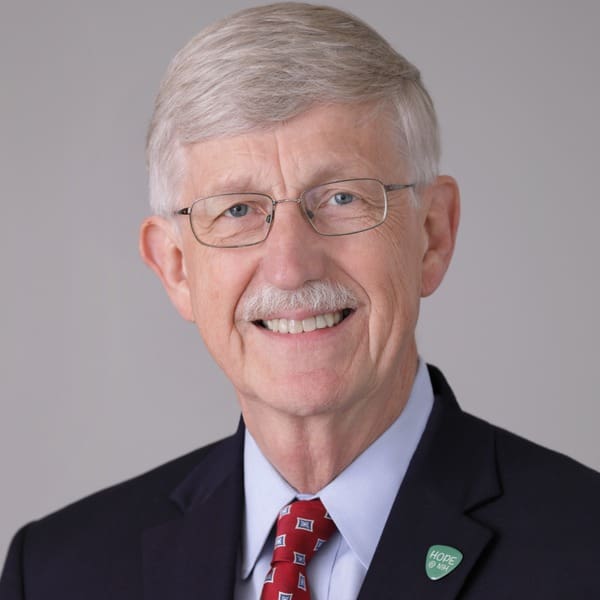
Francis Collins directed one of history’s greatest scientific undertakings, the Human Genome Project, as a committed Christian. But he began his career as an atheist who believed science made God unnecessary.
His conversion started, not in a lab, but in a hospital room. Patients facing terminal illness who relied on their faith with remarkable peace began to unsettle his certainty. Collins turned to C.S. Lewis, began studying moral philosophy, and concluded that the existence of a universal moral law pointed unmistakably toward a moral lawgiver. At age 27, he committed his life to Christ.
In “The Language of God,” Collins argued that science and faith are not enemies but complementary lenses on reality. He served as director of the National Institutes of Health from 2009 to 2021 and was never shy about his faith in the public square.
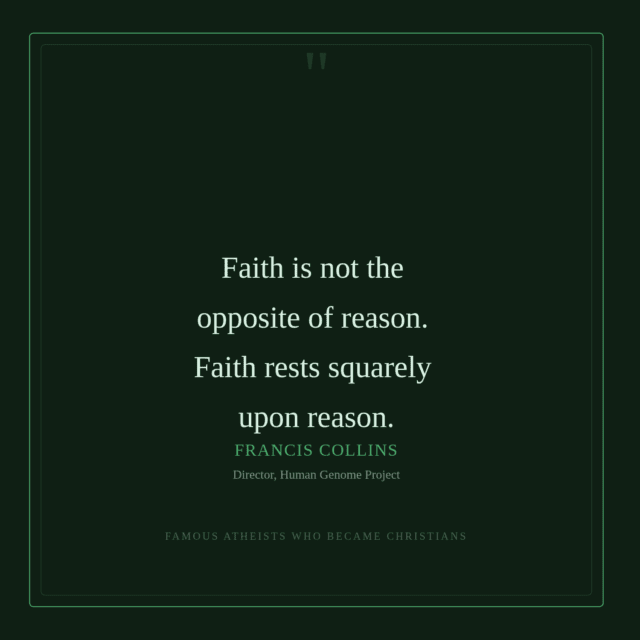
“Faith is not the opposite of reason. Faith rests squarely upon reason.” — Francis Collins
Key takeaway: Collins demolishes the false choice between science and Christianity. His is a powerful story to share with anyone who believes faith requires intellectual surrender.
7. Anne Rice: The Author of Darkness Who Found Light — and Complicated It
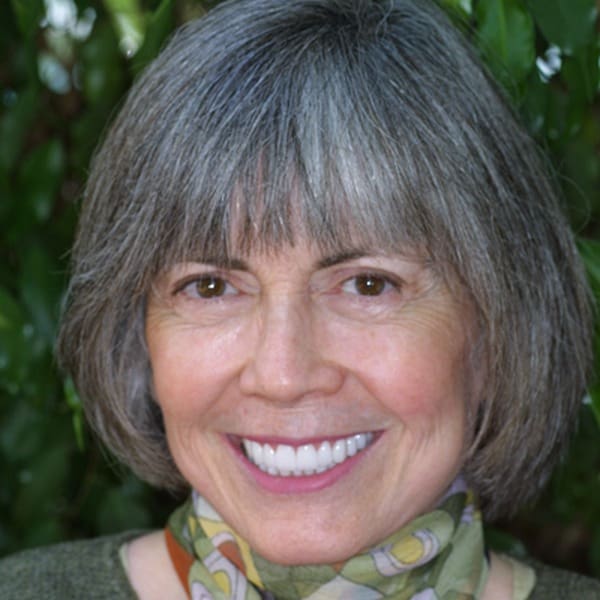
Longtime “pessimistic atheist” Anne Rice became famous for her gothic vampire novels. In 1998, she returned to the Catholic faith of her childhood after years of unbelief. In the decade that followed, she wrote “Christ the Lord: Out of Egypt” and “Christ the Lord: The Road to Cana,” literary novels about Jesus’ life that she described as her most personal and important work.
Then, in 2010, Rice publicly announced she was leaving “organized religion,” frustrated by what she saw as the failures of church leadership and culture. She made clear she still believed in Christ, but not institutional Christianity.
Her story doesn’t have a tidy ending, and that’s precisely what makes it worth telling honestly.
Key takeaway: Rice’s journey holds three lessons: God can pursue people through unexpected paths; those who appear post-Christian aren’t beyond reach; and new believers are watching how church leaders and members live. Walk the walk.