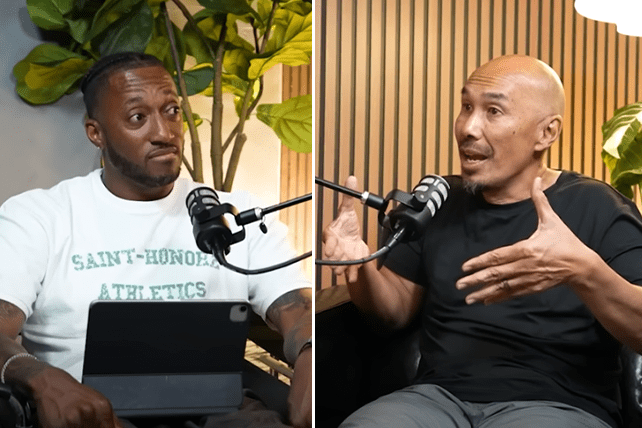
Francis Chan built exactly what most pastors dream about. A megachurch in Southern California, bestselling books, Bible studies used in churches worldwide. Then one honest conversation with his wife stopped him cold.
What he said to her — and what she said back — became the turning point that would eventually lead him to walk away from all of it.
The Uncomfortable Confession
Chan sat down with rapper and speaker Lecrae for a candid conversation about one of the most countercultural decisions in recent evangelical history. Most people who heard what Chan did couldn’t understand it. Chan understood it completely.
“If the Apostle Paul or Jesus had a church in Simi Valley, mine would be bigger. And that is bothering me.”
That wasn’t false humility. Chan meant it literally. He told Lecrae he knew how to keep a crowd. He understood the dynamics of momentum, relevance, and platform. Jesus and Paul, he noted, didn’t keep crowds. They often did the opposite.
For Chan, that gap between his results and Jesus’s results wasn’t a sign of success. It was a warning sign.
What the New Testament Church Made Him Realize
As Chan looked more carefully at the early church described in the New Testament, two things stood out that he couldn’t reconcile with what he had built.
1. Real Love for One Another
The New Testament places enormous weight on believers genuinely loving each other — not attending the same service, not cheering for the same preacher, but actually loving one another the way Christ loved them. Chan looked at his megachurch and had to be honest.
“That’s not what I created. I got a bunch of people — thousands of people — playing church.”
That word, playing, is the one that stuck. There’s a difference between a congregation and a community. Chan had built a congregation. He wasn’t sure he had built a community.
2. Every Believer Has a Gift — and Most Were Unused
The second issue was equally convicting. The New Testament describes a church where every member has a spiritual gift meant for the body. Chan had 5,000 people with gifts he knew nothing about. Most of those gifts were never used in any meaningful way.
“I don’t know how to do that in a giant room.”
That admission wasn’t defeat. It was clarity. The structure he had built made certain things almost impossible — not because he hadn’t tried hard enough, but because the model itself had limits.
He Tried to Change It From the Inside First
Chan didn’t walk out the door immediately. He tried to reshape the church from within, pushing it toward something more like what he saw in Scripture. The attempt created more friction than fruit.
Eventually, he made the decision to step away entirely.
He was clear with Lecrae that this wasn’t a story about success or vision or strategy. It was simpler than that.
“All I want to do is be faithful to your Word, do whatever it says. I can let go of the numbers. I can let go of the fame, the money, everything.”
For Chan, the megachurch wasn’t the problem. His own willingness to hold it loosely was the test.
The Insecurity No One Talks About
One of the most surprising parts of Chan’s conversation with Lecrae wasn’t about church structure. It was about his own faith.
After nearly 30 years of preaching, writing, and leading, Chan admitted something most pastors would never say out loud.
“I’m still only 90 percent sure I’m going to heaven.”
He had been reading 1 John 4:18 — ‘Perfect love drives out fear’ — and realized that fear and insecurity about his standing with God had been quietly running in the background for decades. He had been working to prove his love for God rather than resting in God’s love for him.