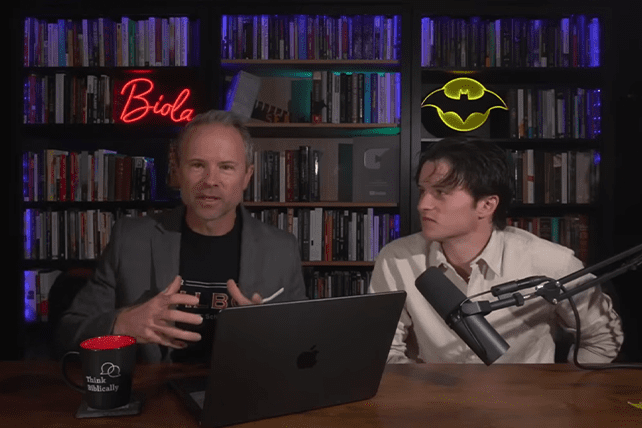
McDowell noted that while the early seasons of the show depicted the characters interacting with apparently demonic forces, subsequent seasons began “demystifying” the supernatural phenomena that the characters encountered by offering a scientific explanation for them.
“And the piece in Season 5, they were talking about this mystical, this magical energy field that Nancy shoots and it kind of blows up,” said Sean. “And they realize, again, ‘Oh this is not magic; it’s not supernatural. There’s a natural explanation for this.’”
RELATED: Sean McDowell Pushes Back on the 10% Tithe—and Says Many Christians Were Taught It Wrong
Sean said that this tendency of “demystifying” began in the earlier seasons of the show and was exemplified by the fact that when the characters encountered apparently supernatural phenomena, they sought advice not from priest, shaman, or pastor, but from a science teacher.
“They’re giving the appearance as if this is supernatural, but they’re slowly subverting it, one by one, and explaining things away naturalistically,” said Sean. “So the worldview underlying ‘Stranger Things’ is naturalism. I don’t think it’s actually supernaturalism.”
Sean went on to say that the show is “a subversion of things that are supernatural.”
“If you’re paying attention, there are certain things we associate with being supernatural, but it’s like explaining demon possession away as mental illness,” he added. “That’s the kind of thing that this show is doing on steroids.”
Nevertheless, Sean argued that the show still contained spiritual themes. In fact, he argued that Eleven, one of the show’s main characters, served as a “Christ figure.” Noting that Eleven was “the most powerful character,” Sean also remarked that she was “misunderstood” and “persecuted.”
“Ironically, her mother is mentioned. Her father is never mentioned,” said Sean. “This is almost like a kind of virgin birth.” Sean further pointed out that in the first season of the show, Eleven seemed to sacrifice herself to save the other characters only to “resurrect” later on. The same theme was repeated in the show’s final episode, as Eleven again appeared to lay down her life—although her fate is left up to the viewer’s interpretation.
Sean questioned whether the show’s creators and writers intentionally conveyed Christian themes but argued that as humans, these themes are “written on our hearts.”
The two McDowells went on to express concern that while Christian themes can be found in the show, “Stranger Things” also seemed to glorify dark supernatural themes even while denying that such themes have real power. Referring to a “Stranger Things” Ouija Board that was sold following the show’s first season, Scottie said, “I don’t think the Duffer brothers believe that it’s real…It’s probably why there’s ‘no big deal’ with it.”