Accessible KidMin Space (cont.)
Next up: Use these questions and this video series to guide your assessment:
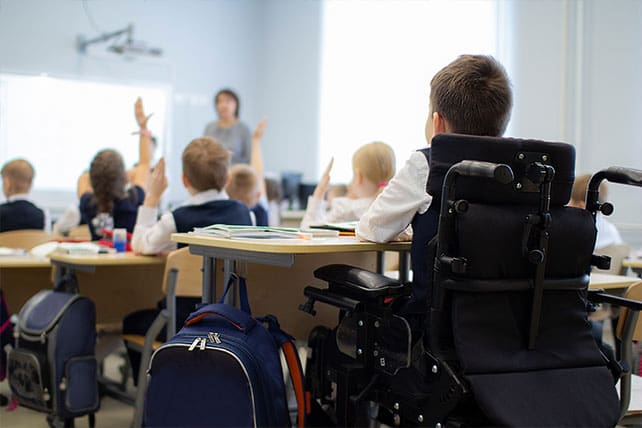
- Are all parts of the learning environment accessible for each student? Make sure to consider areas like playgrounds, stages, and bathrooms.
- Are tables and chairs the proper height? It’s hard for anyone to sit still in a chair when their feet are dangling. Also consider proper table height for a person using a wheelchair, to allow easy access for the armrests and footrests.
- How is the sound and noise level? Does the room echo? Is there noise from another area? Are there irritating noises like the buzz of fluorescent lights?
- Is your church too loud, too bright, or too crowded for kids with hypersensitivities? Be alert to bright colors and busy patterns on floors, ceilings, or walls. These can be overstimulating and distracting.
- Does anyone need video captions, a hearing loop, or a sign language interpreter?
- Is the lighting optimal? A person with low vision or light sensitivity may need accommodations such as lamps or light covers.
- Are the decorations distracting or helpful to the learning environment? Visual schedules and review materials can be helpful.
- Do teachers present information in a variety of ways? Do they encourage responses in multiple formats (written, typed, spoken, drawings)? Are teaching and learning multisensory? Universal Design—an educational method for developing practices that include and support the learning of students with disabilities—benefits everyone.
For a survey to evaluate in more detail how accessible your church is, click here.
Be Sensory-Friendly
One in six people has sensory-processing issues, which can greatly interfere with learning. People with sensory sensitivities can be easily distracted or overwhelmed by sensory input. Others may need extra sensory input to become engaged in learning.
So observe students for signs of sensory sensitivity. For example, notice if kids cover their ears or eyes or always wear a hoodie, hat, or coat to shield themselves from sensory input. Some students may withdraw, hide, or try to leave the room if their sensory system is overloaded.
Sensory overload can even cause a neurological stress response such as meltdowns, which can appear to be tantrums. Or children might feel ill or shut down, which can appear to be non-compliance or zoning out.
So try these essential sensory tools and adjustments to help kids who show signs of sensory overload:
- Noise-reducing headphones like those found in hardware stores
- Digital supports like text-to-speech and voice-to-text
- Extra time for a child to talk; also take the extra effort to understand
- Calming weighted item such as a weighted stuffed animal or weighted shoulder wrap
- Alternative seating is another wonderful way to make learning more accessible to many. Allow students to stand at a table or at the back of the room.
- Wiggle seats (also called balance discs) and wobble stools are great ways to provide movement while staying seated.
- Allow students to move frequently during learning by building in active learning games and brain breaks. Group’s curriculum builds this in for you!
- Don’t call on someone to read or speak aloud; ask for volunteers.
Keep Learning!
While you can take a few simple steps to add more inclusivity to your ministry, there’s always room to grow! For video training about becoming sensory-friendly, check out these free short training videos from Overcomer Ministries.
Charla Holst, OTR/L, serves as founder and President of Overcomer Ministries, Inc., where she provides Christ-centered occupational therapy consultation and training. She also serves as the Disability Ministry Leader at her local church. Holst has written three books: Empowering Occupational Therapy, All That I Want To Be, and Control Is My Goal.
This article was originally published on ChildrensMinistry.com, © Group Publishing, a division of David C Cook.