
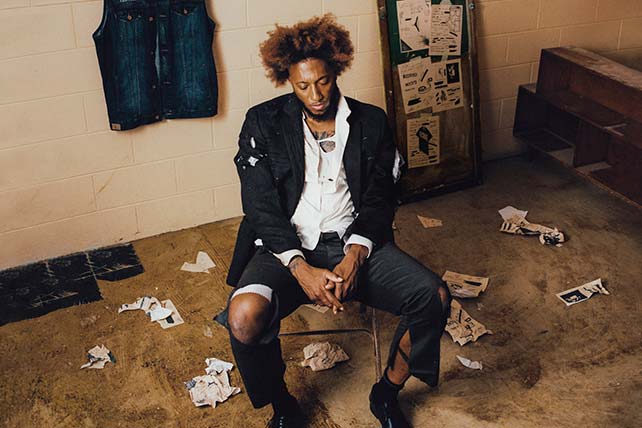
Where He Landed: Reconstruction
His deconstruction had a destination. It didn’t end in atheism or agnosticism. It ended in what he describes as a deeper, more historically grounded understanding of Jesus.
“When I re-enlisted, I learned the eastern context, the way that Jesus meant it,” he raps. That line points to something he’s discussed extensively in interviews: his turn toward reading Scripture through its original cultural and historical lens rather than through the filter of Western evangelicalism. He came to believe that the interpretive tradition he had inherited came loaded with cultural assumptions that needed separating out.
That process was painful. He also believes it was necessary.
In August 2025, he made that arc official with his tenth studio album, Reconstruction, released via Reach Records. The title was not a coincidence. Featuring Jackie Hill Perry, Killer Mike, T.I., Jon Bellion, and Propaganda, the album functions as the answer to everything Church Clothes 4 raised. Then in February 2026, he released Reconstruction: Second Story, a 26-track, two-disc continuation meant to be heard alongside the first album as one body of work. Together, the two projects represent the longest artistic statement he has ever made. They exist because of the years he spent in the wreckage.
Why This Story Still Matters
Deconstruction is not a trend that peaked and passed. Studies consistently show that young adults raised in faith communities are leaving organized religion at significant rates. The questions Lecrae wrestled with publicly, about race, belonging, church trauma, and the gap between what was preached and what was practiced, are questions millions of people are sitting with privately.
His story doesn’t offer easy answers. What it offers is a model: someone who went all the way to the edge, documented it honestly, and came back with something rebuilt. That matters for people in the middle of their own deconstruction who want to know if reconstruction is actually possible. It also matters for church leaders trying to understand why people they love are pulling away.
What Church Leaders Can Take From This
Lecrae named pastors in his music. He named moments. He named the specific experience of bringing pain to spiritual authority figures and being handed shame instead of care.
That’s not a minor detail. It’s a direct warning about what happens when pastoral culture prioritizes theological tidiness over honest engagement with people who are hurting. When someone arrives with a wound and leaves with blame, deconstruction becomes almost inevitable.
His message to the church is not to stop preaching. It’s simpler than that. “I think that if we’re really serious about our faith, we are walking with people through that process.”


