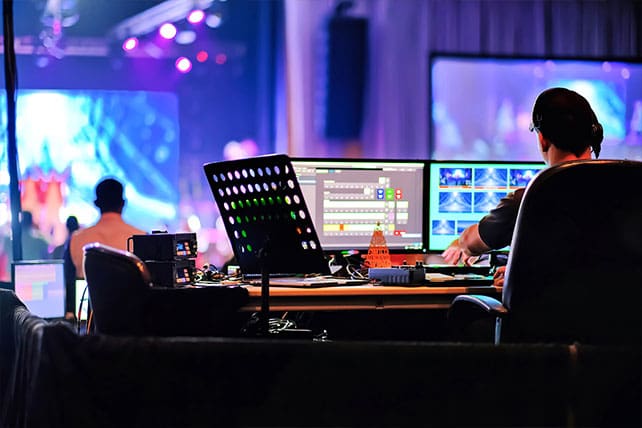
Technology in worship now shapes nearly every moment of the modern church gathering. Screens glow, lyrics scroll, cameras stream, and software schedules every volunteer. What once felt innovative now feels normal.
But a quiet question lingers for many leaders. At what point does technology in worship stop serving the church and start shaping it?
The answer matters more than most ministries realize.
Why Technology in Worship Keeps Expanding
Few churches adopt technology for the wrong reasons.
They add screens to help people sing.
They add livestream to reach the homebound.
They add planning software to reduce chaos.
All of this begins with pastoral instinct.
The challenge comes when tools multiply faster than clarity.
As churches grow more complex, technology often promises efficiency, excellence, and reach. Those are real gifts. But every tool also reshapes attention, culture, and expectations.
RELATED: Hybrid Worship Technology
The question is not whether technology belongs in worship. It already does. The question is how much is forming disciples and how much is forming consumers.
When Technology in Worship Serves the Mission Well
At its best, technology in worship quietly supports spiritual formation.
Removing Barriers to Participation
Well-used technology lowers obstacles.
-
Clear lyrics help people sing
-
Accessible livestreams serve the sick and homebound
-
Hearing assistance systems welcome the hearing impaired
-
Online giving simplifies generosity
These are acts of hospitality.
Paul’s principle still applies. “Let all things be done for building up” (1 Corinthians 14:26). When technology builds up the body, it belongs.
Strengthening Communication and Coordination
Behind the scenes, technology often protects volunteers.
Scheduling software prevents overuse.
Group messaging improves clarity.
Digital planning tools reduce confusion.
When tools reduce friction, they preserve energy for ministry rather than logistics.
When Technology Starts to Shape the Worship More Than the Worship Shapes the Technology
Problems rarely appear all at once. They surface gradually through small shifts.
When Excellence Becomes Performance
As production increases, expectations change.
Lighting cues become more complex.
Visuals demand perfection.
Mistakes feel amplified.
Slowly, worship begins to resemble a presentation more than a prayer.
Excellence honors God. Performance often centers the platform.
The difference is not skill. It is intent.
When Volunteers Become Operators Instead of Worshipers
Highly technical systems require specialists.
Some volunteers now spend entire services behind screens, mixing, switching, troubleshooting, and never singing.
When technology separates servants from worship for long seasons, spiritual formation suffers quietly.
Ministry roles should build faith, not replace it.