When Congregational Attention Shifts
Screens subtly teach people where to look.
Lyrics, backgrounds, announcements, sermon graphics, countdown timers, and videos compete for attention.
Over time, the room trains people to watch rather than participate.
The danger is not distraction alone. It is displacement.
Worship slowly moves from embodied prayer to visual consumption.
Signs Your Technology in Worship May Be Too Much
No single tool determines health. Patterns do.
Consider these warning signals.
-
Volunteers are harder to recruit and easier to burn out
-
Systems require constant troubleshooting
-
Worship teams fear failure more than they pursue faithfulness
-
Congregational singing is declining
-
Budget growth favors gear over people
-
Leaders hesitate to simplify because expectations feel locked in
Technology becomes unhealthy not when it is advanced, but when it becomes indispensable to spiritual effectiveness.
If worship collapses without a screen, something is misaligned.
How to Evaluate Technology in Worship Wisely
Healthy churches regularly audit their tools.
Ask the Right Questions
Instead of asking what is possible, ask what is pastoral.
-
Does this help people engage God more fully?
-
Does it strengthen participation or replace it?
-
Does it form disciples or simply impress guests?
-
Does it support our mission or complicate it?
The most faithful choice is not always the most impressive one.
Simplify Ruthlessly When Needed
Complex systems create fragile worship.
Healthy churches periodically remove layers.
They:
-
Reduce unnecessary visuals
-
Streamline lighting cues
-
Simplify software stacks
-
Lower production dependence
Simplicity restores flexibility, lowers stress, and often increases authenticity.
RELATED: Church Tech Turn-Offs
Train for Theology, Not Just Technique
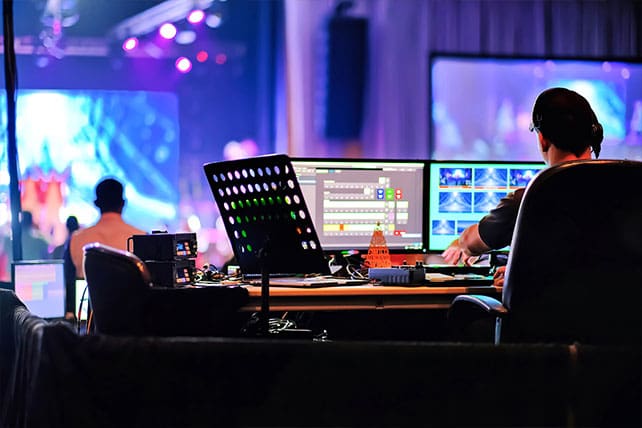
Technical teams shape theology more than they realize.
They decide what is highlighted.
They frame attention.
They influence mood and pace.
Training should include spiritual formation alongside technical skill.
Operators are worship leaders too, even if they never hold a microphone.
Reclaiming the Heart of Worship
At its core, worship remains stubbornly simple.
God speaks.
God’s people respond.
The Spirit moves.
Technology can support that sacred exchange. It should never replace it.
Psalm 46:10 still anchors every era. “Be still, and know that I am God.” Stillness is increasingly rare in highly produced environments.
Sometimes the most radical act of leadership is restraint.
Technology in worship is a gift. It is also a powerful shaper of culture.
Used wisely, it opens doors.
Used carelessly, it narrows hearts.
Used excessively, it exhausts leaders and numbs congregations.
The goal is not to go backward. It is to go deeper.
Audit your systems.
Listen to your volunteers.
Watch your congregation.
Protect participation.
When technology serves the mission quietly, worship thrives.
When worship serves the technology, something holy is slowly lost.
Lead with discernment. The health of your worship depends on it.