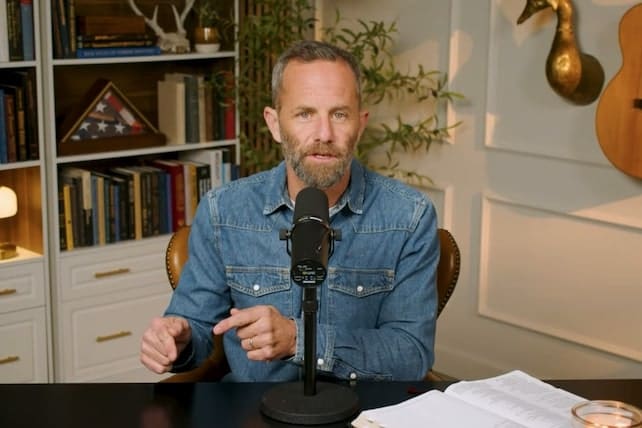
Evangelist Kirk Cameron: ‘I Believe in Hell’
To clarify his stance, Kirk Cameron told viewers that he believes in hell and judgment and hasn’t “denied the authority of Scripture.” Instead, he pondered “an honest theological question, one that faithful Christians have wrestled with for hundreds, even thousands of years.”
Confusion swirls around annihilationism and conditionalism, according to Cameron. Rather than teaching that wicked people just “poof disappear,” he said, they hold that “immortality is not something that all people automatically possess.”
RELATED: Kirk Cameron’s Position on Hell Is ‘Unorthodox’ but Not ‘Heresy,’ Says Apologist Wesley Huff
Judgment and “real punishment” still occur, Cameron continued, but the debate centers on “what Scripture says is the final outcome of that judgment.” In other words, “Does that conscious torment last forever and ever and ever,” he asked, “or does it eventually come to an end and the person is annihilated?”
Many theologians and church leaders whom Cameron most admires teach “the traditional view of hell,” he said, “and I honor them deeply for the way they handle the Word of God with extreme care and reverence and holiness with a desire to understand it.”
Yet questions about eternal torment date back to the early church fathers, Cameron explained. “So when I ask questions about how the Bible describes final judgment, I am not rejecting orthodoxy,” he said. “I’m standing in a long Christian tradition that believes Scripture deserves careful, humble, and honest study.”
Pastors are his allies, not his adversaries, said Cameron, who emphasized that he is on the frontlines of evangelism because “I believe eternity is at stake.”
“We know that the gospel is not merely avoiding hell and punishment,” Cameron said. “The gospel is about knowing the Father, the only true God, and his Son Jesus Christ, and receiving the gift of eternal life.”
Kirk Cameron Plans To Host Roundtable Discussion
To conclude his response video, Kirk Cameron said, “Unity matters [for] core Christian truths,” such as those stated in the Apostles Creed and the Nicene Creed. “It’s interesting that neither [creed] mentions the topic we have been discussing,” he added, “because it is a secondary issue.” Cameron then led viewers in reciting the Apostles Creed.