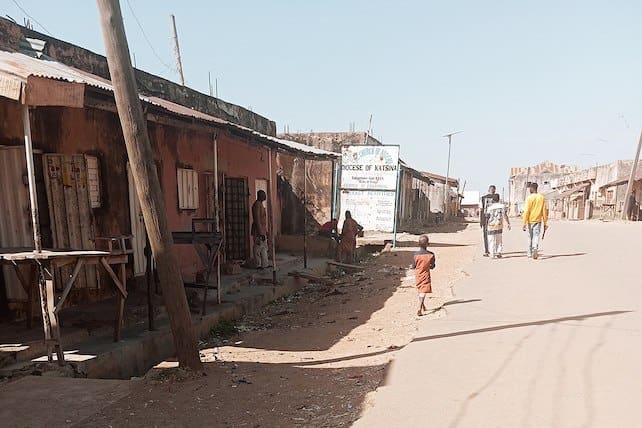
Last fall, President Trump designated Nigeria as a “country of particular concern,” writing that “something must be done!” In a letter last month, more than 80 people with NFL connections urged Trump and U.S. lawmakers to provide security, sanctions, and aid in the troubled nation.
RELATED: Rapper Nicki Minaj Speaks Out Against Persecution of Nigerian Christians
On Christmas night, Trump posted that America had launched a “deadly strike against ISIS” in northwest Nigeria. “Under my leadership, our Country will not allow Radical Islamic Terrorism to prosper,” the president wrote.
To address the high rate of persecution in Sub-Saharan Africa, Open Doors launched a multi-year campaign called Open Doors Arise Africa. Christian churches in Africa asked the nonprofit group to raise awareness about Christian persecution there, said CEO Ryan Brown. They also urged Open Doors to “leverage voices at the [United Nations] and in the European Union and with other state actors.”
Conflicts and Pressure Make Christians Vulnerable
Even when Christians aren’t the direct targets of violence, Open Doors noted, internal conflicts increase the vulnerability of people who follow Jesus. Instability and “vacuums of power” allow “extremist groups to advance their anti-Christian agenda,” according to Open Doors.
CEO Ryan Brown also described “squeeze persecution,” in which Christians are pressured to scale back their practices or go underground. This type of persecution has a chilling effect on Christian worship and fellowship, said Brown, pointing to increased regulations on churches in China.
When Christians and congregations are pressured and silenced, they often can’t even reveal what they’re experiencing. That’s the case in Algeria, No. 20 on the 2026 World Watch List. Violence in that nation has decreased only because so many churches have recently closed, Open Doors explained. During the past few years, 47 churches in Algeria have shuttered, leaving three-fourths of believers there with no opportunities for Christian worship, education, and fellowship.
With technology such as artificial intelligence, governments now can monitor Christian activity in covert ways, Brown said. For example, communist leaders in North Korea track “suspicious behavior patterns” that might point to people practicing their faith. As the types of persecution evolve, Brown noted, so must the response of concerned Christians.
Although Western Christians report feeling more hostility toward their beliefs, Brown said that doesn’t compare to the persecution our brothers and sisters experience across the globe. Despite some secular shifts in the West, Brown said, Christians in America and Europe still enjoy “religious liberties that are protected.”
Brown did note, however, that growing anti-Christian sentiment in Western cultures might help U.S. Christians better identify and empathize with persecuted believers throughout the world.