While Soerens said that “no one is actually proposing” a completely closed border, “it’s a question of, how do you ensure a secure border while treating people humanely—and what do you do then when someone has crossed that border unlawfully?” Soerens argued that penalties for illegal immigration should respect both “the government’s authority” and “the dignity of people and the dignity of the family unit.”
Grudem said that he agreed with Soerens in that Grudem is “in favor of a secure wall with doors.” But he also indicated his belief that the number of immigrants who are allowed through those doors should be commensurate with the capacity of infrastructure.
Soerens said that he is not in favor of “unlimited immigration” but that the United States should have “robust immigration opportunities,” and that these opportunities are “one of the primary ways you minimize the risk of unlawful migration.”
While Soerens and Grudem disagreed about some of the particular policy solutions that could address the challenges present in the United States’ immigration system, they both agreed that immigration policy is complex, that the border should be secure, that those fleeing persecution should be able to find safe haven in the United States, and that undocumented immigrants should be held accountable but treated humanely and reasonably.
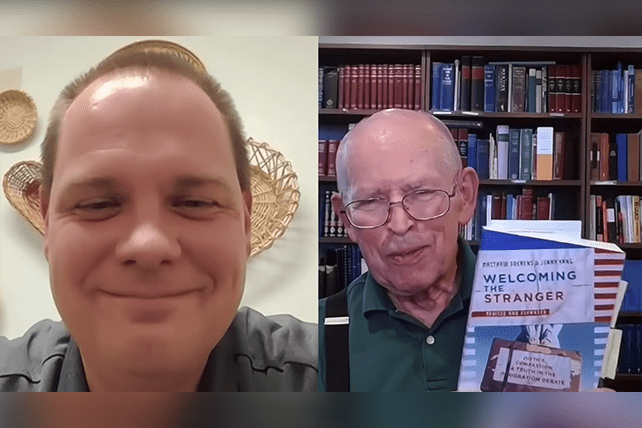
At the end of the conversation, Grudem held up a copy of “Welcoming the Stranger,” which Soerens coauthored, and said, “[Soerens] gave me new information about the complexities of our legal system and the dilemma that undocumented immigrants face. And it changed my mind on some of these things.”
RELATED: Fact Check: Do Refugee Resettlement Organizations Promote Illegal Immigration?
“Here I am, next month [I’ll be] 78 years old. I don’t change my mind on much right now,” he added. “But, Matthew, you did.”