
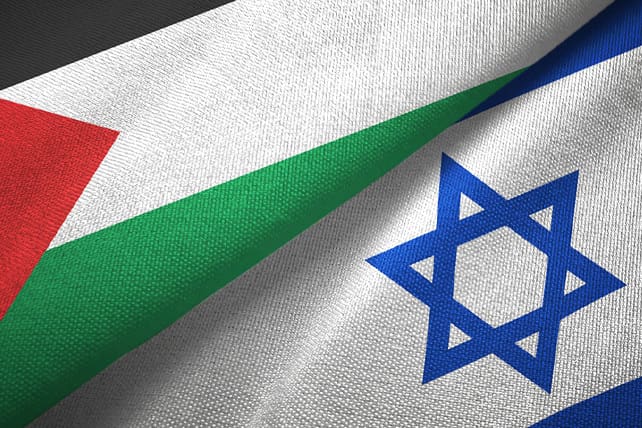
When I agreed to speak at Urbana25 in Phoenix, I did not expect my remarks about Palestinian suffering to be interrupted again and again by thunderous applause.
On New Year’s Eve, I participated in a panel that brought together two voices often assumed to be irreconcilable: a Palestinian Christian leader and a Messianic Jewish leader, sitting side by side, wrestling publicly with Palestine, Israel, Scripture, and the gospel. The room was filled with more than seven thousand students. Urbana deserves credit for creating space for a conversation many Christian leaders know is necessary but have largely avoided in public. The atmosphere was tense, attentive, and serious.
What surprised me most was not the intensity of the room. It was the emotional register of the response.
The strongest response from students was not anger or ideology, but relief. Relief that Christian leaders were willing to name suffering without defensiveness. Relief that Scripture was not being used to silence compassion. Relief that the gospel could still speak truthfully to one of the most painful conflicts of our time.
Afterward, a student told me, “This is the conversation I’ve been begging my church to have for two years.” Another asked, “Why are we listening to politicians and distant theologians instead of the people actually serving on the ground?”
A few pressed me in the opposite direction: “You were too restrained,” one said, urging stronger language about Gaza. Most, however, expressed gratitude for clarity and conviction, and for theology that did not require suspending compassion.
That moment revealed something the church must take seriously. Many of the young Christians were rejecting a version of Christian witness that appears unable to hold biblical faithfulness and moral clarity together.
From the main stage, I named this tension theological dissonance. In conversations that followed, students and several pastors told me the language helped them name something they had struggled to articulate. They had been formed to revere Scripture, follow Jesus, and care deeply about justice. Yet they were struggling to reconcile those commitments with what they experienced in their churches: silence, or uncritical alignment, especially a reluctance to name Palestinian suffering.
This is not merely a political problem. It is a theological one.
When Scripture is mobilized to justify violence, displacement, or the erasure of an entire people’s humanity, the credibility of the gospel itself is put at risk. When compassion becomes selective, young believers notice. And when biblical promises are invoked without accountability to the full counsel of Scripture, the tension becomes impossible to ignore.
Many young Christians are not reacting to slogans or social media narratives. They are responding to what they are witnessing in real time: mass suffering and the killing of civilians in Gaza. To dismiss their moral response as mere propaganda is not only inaccurate. It is deeply patronizing.
Scripture does not give us permission to ignore human suffering. It never has.


