In practical terms, a dark night of the soul is a season of spiritual dryness, doubt, or emotional darkness in which a believer feels abandoned by God even while continuing to pursue faith. It differs from ordinary discouragement in several ways:
- The person continues to believe in God but cannot feel God’s presence.
- Spiritual practices that once brought comfort may feel empty.
- The experience often involves deep self-examination and personal transformation.
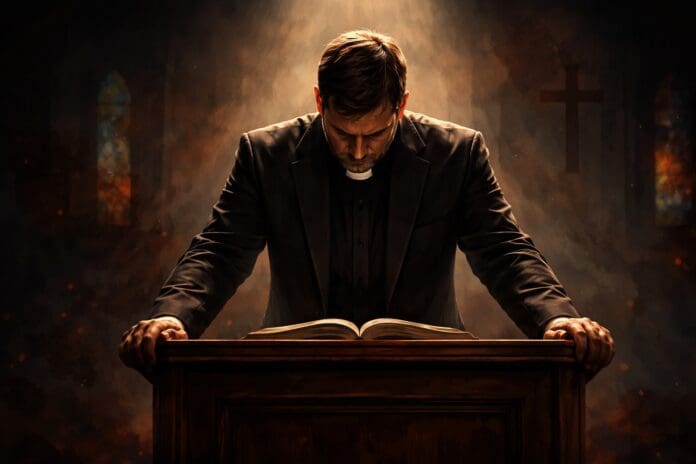
For pastors, this experience can be particularly disorienting. They are expected to guide others spiritually even while their own spiritual life feels dim. As one pastor famously summarized the tension: “You stand every Sunday proclaiming hope while quietly wondering where yours went.”
Why Pastors Are Vulnerable to Spiritual Burnout
Several structural realities of ministry make pastors uniquely susceptible to burnout and spiritual crisis.
1. Emotional Labor Pastors routinely walk with people through grief, trauma, illness, addiction, and marital crisis. They officiate funerals, counsel struggling couples, and comfort families in hospital rooms.
Psychologists refer to this kind of constant caregiving as emotional labor, and it can be draining when there is little opportunity for pastors themselves to receive care.
2. Role Ambiguity Few professions have such an undefined job description. A pastor is expected to be preacher, counselor, teacher, administrator, mediator, fundraiser, and community leader—often simultaneously.
Studies show 50% of pastors feel unable to meet the demands of the role, a statistic that highlights the impossibly broad expectations many churches place on their leaders.
3. Isolation in Leadership Unlike other professions, pastors often lack peers within their workplace. They may supervise staff but have no true colleagues inside the congregation. This isolation helps explain why over half of pastors report loneliness or lack of support in ministry.
4. Constant Visibility Pastors live under a unique kind of scrutiny. Their sermons, leadership decisions, family life, and even personal habits may be subject to congregational evaluation. This public pressure can produce chronic stress and self-doubt.
5. Spiritual Responsibility Finally, pastors often feel personally responsible for the spiritual health of an entire congregation. When attendance declines, conflict erupts, or members leave the church, pastors may internalize the blame. Over time, that burden can lead to spiritual exhaustion.
The Struggle Is Real
High-profile ministry leaders have increasingly spoken openly about burnout.
Pastor and author Wayne Cordeiro, for example, publicly described a season when he was so emotionally depleted that he could barely write sermons or get out of bed. His experience eventually led him to write the widely read book Leading on Empty, which chronicles his journey through ministry burnout and recovery.
Similarly, several prominent pastors in recent years have stepped away from ministry citing mental health struggles or exhaustion. These departures have sparked broader conversations about the sustainability of modern pastoral leadership. Yet for every public story, countless pastors experience similar struggles privately.
One surprising finding in ministry research is that while burnout is widespread, most pastors remain committed to their calling.
Even amid exhaustion, many continue serving faithfully for decades. Lifeway’s research suggests that pastors rarely abandon ministry outright; instead, they often move to new churches or other ministry roles when transitions occur. This paradox reveals something important about pastoral identity: ministry is rarely just a career for those behind the pulpit. It is a vocation deeply tied to a sense of calling, and as such, very difficult to walk away from.