6. Distractions: When Good Things Become the Enemy
The opportunity was incredible: a book deal, a speaking tour, a TV appearance. All good things. All ministry-related. But deep down, the pastor knew these “good” opportunities would pull him away from the specific calling God gave him.
If the enemy can’t divide you, he’ll distract you. And the most dangerous distractions aren’t bad things—they’re good things that aren’t the best things. They’re opportunities that sound spiritual but pull you away from your core convictions and calling.
What it looks like: Saying yes to every speaking invitation. Adding programs because other churches are doing them. Pursuing a larger platform when God called you to faithful presence. Chasing growth metrics instead of spiritual depth.
How to stand: Jesus himself withdrew from crowds and opportunities to stay focused on his mission (Mark 1:35-38). When people wanted to make him king, he redirected them. When they wanted more miracles, he taught instead. He knew his assignment.
Your response: Develop a personal mission statement based on God’s unique calling on your life. When opportunities arise, measure them against that calling. Learn to say no to good things so you can say yes to God things.
7. Defamation: When Your Character Is Attacked
Paul was hounded by the Judaizers who followed him from city to city, spreading lies about his teaching. Nehemiah dealt with Sanballat’s constant accusations and threats. Jesus was falsely accused of blasphemy. The pioneers out front are most likely to get shot in the back.
What it looks like: Your motives are questioned publicly. Your past is dredged up and weaponized. Critics create narratives about you that bear little resemblance to reality. People who’ve never met you feel qualified to judge your character.
How to stand: Understand that expanding influence brings intensifying opposition. If you’re leading well, you will be defamed. It’s not a sign you’re doing something wrong—it’s often a sign you’re doing something right.
Your response: Don’t fight every battle. Some accusations don’t deserve a response. Keep your integrity intact, let your life speak, and trust God to defend your reputation in his timing. As my mentor once told me, “Stay low and let God lift you up.”
8. Danger: When Following Your Convictions Becomes Costly
The Bible never promised believers a life “safe and secure from all alarms.” Jesus told his disciples to expect persecution (John 15:20). Paul was shipwrecked, beaten, imprisoned, and eventually martyred. Those who lead with conviction will encounter danger.
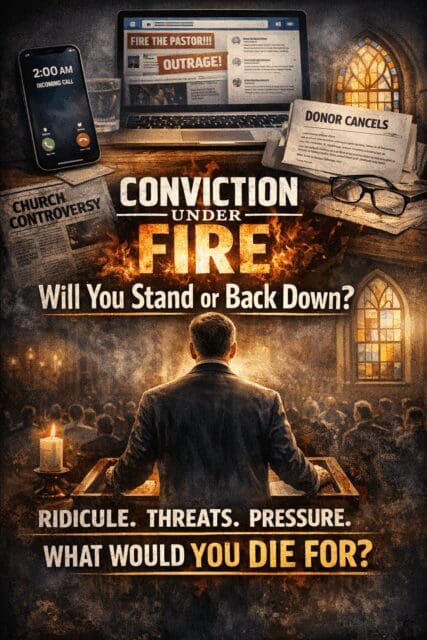
What it looks like: Threats against you or your family. Legal challenges to your church’s beliefs. Financial pressure because of your stance on biblical issues. The risk of losing your position, your reputation, or your security.
How to stand: Count the cost before you commit. Jesus was clear about this (Luke 14:28-33). Don’t be naive about the dangers of conviction-driven leadership, but don’t be deterred either. If God called you, he’ll sustain you.
Your response: “I’m not looking for safety. I’m looking for faithfulness. And if faithfulness costs me everything, so be it.”
What to Do When Opposition Comes
The enemy will use all eight of these tactics—and more—to get you to abandon your convictions. What do you do when the pressure intensifies?
Don’t give up.
Hold onto your convictions. Be persistent. Endure. Outlast the opposition.
When you’re truly committed to your convictions, nothing will cause you to quit. And that “no quit” attitude is an essential characteristic of every great leader.
But here’s what you need to understand: endurance isn’t passive. It’s not just gritting your teeth and surviving. It’s actively choosing, every single day, to stand on the convictions God gave you, regardless of the cost.
Your Turn: Define Your Non-Negotiables
Take 30 minutes this week and answer these questions:
- What are the three theological convictions I would die for?
- What are the three ethical boundaries I will never compromise?
- What is the specific calling God has given me that I must pursue regardless of opposition?
Write them down. Share them with a trusted friend or mentor. Pray over them. Because the time to define your convictions isn’t in the heat of battle—it’s now, in the quiet, before the tests come.
And trust me, the tests are coming.
The question is: Will you be ready?