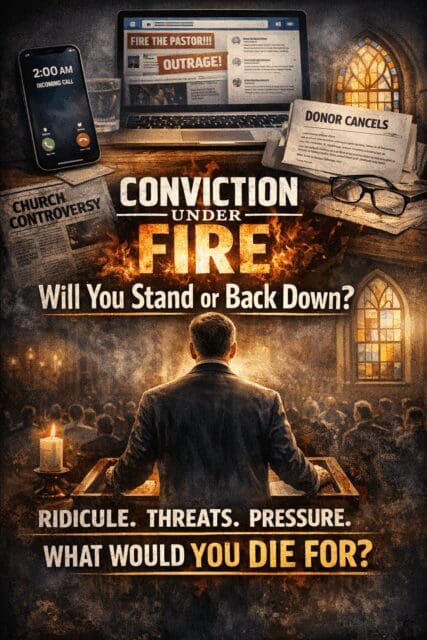
The phone call came at 2 a.m. A board member wanted the pastor fired for his sermon on a controversial biblical topic. By sunrise, social media was ablaze. By noon, major donors were threatening to walk. The pastor had a choice: soften his message or stand his ground.
What would you do?
This scenario plays out in churches across America every week. And it reveals something crucial about leadership: You can fake charisma for a season, but you can’t fake conviction when the pressure comes. And the pressure always comes.
The Difference Between Opinion and Conviction
Here’s a test: What would you die for?
Not what would you argue about at a coffee shop. Not what you’d post on social media. What belief is so central to who you are that you’d lose everything to defend it?
An opinion is something you’d debate. A conviction is something you’d die for.
The real foundation of great leadership isn’t charisma, communication skills, or even competence. It’s character. And at the heart of character are the convictions you refuse to compromise—your theological non-negotiables, your ethical boundaries, your God-given calling that no amount of pressure can shake.
For pastors and ministry leaders, these convictions aren’t optional. They’re essential. Because when you lead people spiritually, you’re not just managing an organization—you’re shepherding souls. And that requires knowing exactly what you stand for and why you can’t back down.
If God has called you to leadership, your identity must rest in your relationship with him, not in the approval of your congregation, your donors, or the watching world. You can’t live in the comparison trap or the fear of what people think. You must develop your convictions—theological, ethical, and practical—and then stand by them no matter what.
The 8 Ways Your Convictions Will Be Tested
Here’s what most leaders don’t realize: conviction isn’t tested once. It’s tested constantly, from multiple angles, often simultaneously. If you’re not prepared for how the attacks will come, you’ll be blindsided.
Believe in advance that your convictions will be tested in at least eight ways:
1. Derision: When Your Convictions Become a Punchline
The mockery started on Twitter. Then it spread to local news. Soon, late-night comedians were making jokes about the pastor who “still believed in outdated ideas.”
When you’re in leadership, one of the first tactics people use to get you to deny your convictions is ridicule. Your deeply held beliefs will become punchlines. Your theological positions will be mocked as backwards or bigoted. Your leadership style will be called toxic or weak.
What it looks like: A staff member rolls their eyes when you bring up Scripture in a meeting. A blogger writes a scathing post about your “harmful theology.” Your kids come home from school embarrassed by what their friends said about their pastor parent.
How to stand: Remember that Jesus himself was mocked, ridiculed, and scorned. If the Son of God wasn’t exempt from derision, neither are you. The question isn’t whether you’ll be mocked—it’s whether you’ll cave when you are.
Your response: “I’d rather be faithful to God and ridiculed by people than praised by people and unfaithful to God.”
RELATED: 8 Preaching Convictions: What Do You Firmly Believe?
2. Discouragement: The Halfway Point Crisis
You’re halfway through the building campaign. Halfway through the sermon series that’s causing controversy. Halfway up the mountain of that impossible vision God gave you. And suddenly, you’re exhausted. The voices in your head say, “This isn’t worth it. Maybe I should quit.”
Discouragement is one of the enemy’s most powerful weapons because convictions, by their very nature, require courage to uphold. And courage is hard to sustain when you’re tired, criticized, and wondering if anyone even cares.
What it looks like: Attendance is down after your bold sermon. Giving hasn’t increased despite your vision-casting. Key leaders are expressing doubts. You wake up dreading Sunday morning.
How to stand: Nehemiah faced this exact test. Halfway through rebuilding Jerusalem’s wall, the workers were exhausted, opposition was mounting, and people wanted to quit (Nehemiah 4:10). His response? He reminded them why they started, positioned people strategically, and kept building.
Your response: Go back to your calling. Journal about the moment God called you to this. Talk to a trusted mentor. Remember: the enemy attacks hardest right before the breakthrough.