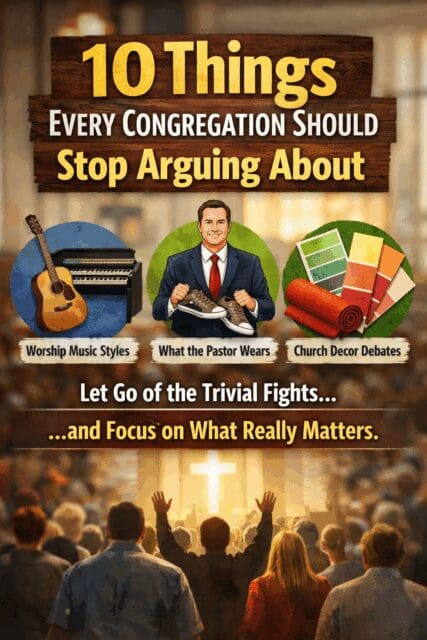
Every congregation has its pressure points, and most of them have nothing to do with the gospel. People who genuinely love Jesus can still end up debating things that drain energy, bruise feelings, and stall mission. When a church family gets caught in the weeds, small issues start to feel enormous. The good news is that these arguments can lose their power the moment leaders name them, reframe them, and call people to something better.
Arguments are inevitable when people care deeply, but some conflicts simply aren’t worth the emotional bandwidth. Churches gain resilience when they decide together which hills are not worth dying on. The path to maturity gets clearer when the body of Christ chooses unity over trivia. Here are ten common arguments that deserve a permanent retirement.
10 Things Every Congregation Should Stop Arguing About
1. The Exact Style of Worship Music
No church has ever been split by a guitar or an organ; the problem is the volume we attach to our preferences. Instead of fighting over tempo or instrumentation, invite members to share stories of songs that shaped their faith. This shifts the room from personal preference to shared testimony. When people see worship as a gift for the whole body, it eases tension fast.
2. What the Pastor Wears on Sunday
Arguing about ties, jeans, robes, or sneakers is a reliable sign that the church has too much time on its hands. Encourage your people to focus on character, faithfulness, and the preaching of the Word. If clothing helps someone approach worship more reverently, that’s fine; if it distracts, that’s fixable. The Spirit has more pressing concerns than footwear.
RELATED: Empowering Leadership to Settle Disputes
3. How Long the Service Should Be
One person wants a tight 60 minutes, another wants the freedom of a 90-minute liturgy. Instead of treating the clock as sacred, invite people to value depth over duration. Offer occasional extended services and occasional short ones. Flexibility teaches discipleship far better than rigidity does.
4. Carpet Colors, Paint Colors, and Décor
These debates can feel bizarrely intense because the worship space is emotionally loaded. If your church can, create a short-term décor team empowered to make decisions so the whole congregation doesn’t referee every shade of beige. Also remind the body that the early church flourished long before anyone picked out a paint sample.
5. The “Right” Way to Greet Newcomers
Some want a handshake, some want quiet anonymity, and some want to drag guests to the fellowship hall like rescued kittens. Train your hospitality team to read body language, offer gentle options, and create a culture that respects boundaries. Newcomers remember kindness, not choreography.