If you think children’s ministry at your church doesn’t serve any kids with disabilities, you’d be surprised. According to the CDC, 1 in 6 kids have a disability, so it’s likely kids with disabilities are coming to your church.
And yet, many churches don’t have a disability ministry. That means there is an incredible opportunity to reach a very unreached people group!
The website church4everychild.org compiled research about children with disabilities and their families. According to their research, about 90% of church-going parents of kids with disabilities said a welcoming attitude was the most helpful support they received. In other words, you don’t need a big budget or a full-time staff member to make your ministry inclusive! Read on to discover how to teach in ways that help all families feel welcome at your church.
With some adaptations, Group curriculum works well to teach kids of all abilities! Sometimes a small modification or highlighting a specific activity is all it takes to make sure everyone is involved and impacted by a lesson. In other words, a little tweak goes a long way!
RELATED: The Complete Guide to Choosing the Best VBS for Your Church
Charla Holst, occupational therapist and founder of Overcomer Ministries, has shared some great ways to adapt curriculum and use it well. Try her five simple ideas to help your teaching be more inclusive for all abilities.
1. Prayerfully Understand Your Goals for Inclusivity in Children’s Ministry
Take time to pray and ask God about your goals for teaching. Maybe you already know your goal, but ask God to show you if your teaching styles are driven by that goal. Often, we may say the goal is to help kids know and love Jesus (or something similar), but we act like the goal is to have kids who can sit still and listen well. Or maybe the goal is to have kids who can recite Bible verses and facts perfectly.
Charla notes that if your goal is truly faith transformation, you can reach everyone! Sometimes we unintentionally make our goals feel more about good behavior. But when your focus is on an inclusive and meaningful goal everyone can achieve, you’ll find that behaviors often follow. Set goals like “hide God’s Word in our hearts” instead of “read and memorize Bible verses” to include everyone. This gets more at the heart behind your ministry and takes out abilities not everyone may have.
2. Understand Kids’ Strengths and Weaknesses
Group Curriculum uses a variety of ways to learn, such as physical activity, logical and spatial reasoning, writing, drawing and crafts, and music. Depending on the needs of your group, some of those activities might work better than others!
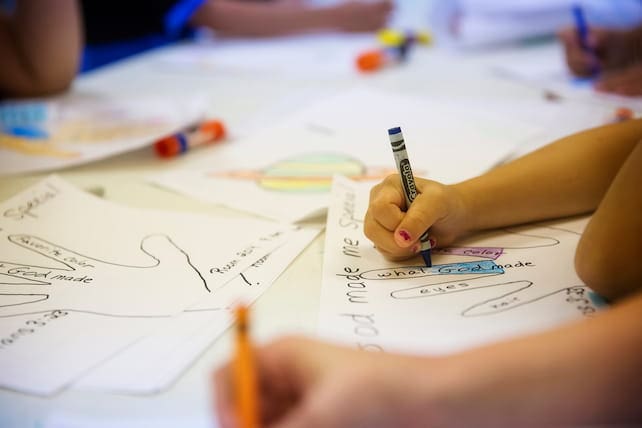
For example, Charla found that many of her kids like to doodle and draw. Her class included a range of abilities, including gifted, kids with autism spectrum disorders, Down syndrome, ADHD, and dyslexia. But she was able to find an experience that included everyone; she simply covered a table with white paper and set out markers to share. As kids learned the Bible story, they were able to illustrate it, and then review what they learned by describing their illustrations.
Charla noted, “One of our students with Down syndrome even found a great illustration of the story on his phone to share with the class along with his drawings. This simple activity allowed all the students, those with disabilities and without, to be engaged in hearing the Word of God and better comprehending it.”