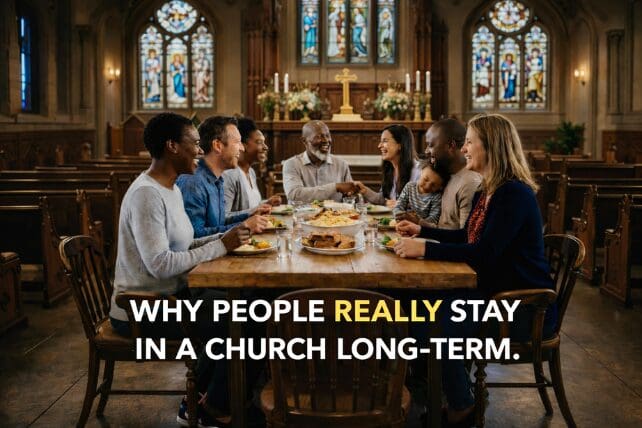
Most churches obsess over first impressions. They pour energy into welcome teams, visitor packets, and slick social media. But here’s the uncomfortable truth: the average churchgoer stays only 4-5 years before moving on.
The real question isn’t who walks through the door on Sunday—it’s who’s still there five years later.
Visitors come for convenience, curiosity, or a friend’s invitation. But long-term commitment? That grows from something deeper. When leaders understand why people actually stay, they can build churches that feel less like a pit stop and more like home.
10 Reasons People Stay in a Church Long-Term
1. Authentic Relationships That Actually Matter
People don’t stay for programs. They stay for people.
Long-term church commitment almost always grows out of friendships where people can be real—where they can laugh about terrible coffee, pray through hard seasons, and show up when life falls apart. These aren’t surface-level “How are you?” relationships. They’re the kind where someone notices when you’re missing and texts to check in.
What leaders can do: Stop treating community like it happens by accident. Create intentional spaces—small groups, shared meals, service projects—where relationships can form naturally. Then get out of the way and let people connect.
RELATED: Reasons People Come Back to Church
2. A Sense of Belonging, Not Just Attendance
There’s a massive difference between attending and belonging.
Attending means filling a seat. Belonging means people know your name, notice when you’re gone, and genuinely care about your life. It’s the difference between being a spectator and being family.
What leaders can do: Model what it looks like to notice people. Learn names. Remember details. Create a culture where every member takes responsibility for welcoming others—not just the greeting team.
3. Worship That Helps People Actually Meet God
People stay when worship consistently leads them into the presence of God. Not performance. Not entertainment. Presence.
It doesn’t need to be flashy or cutting-edge. It needs to be authentic, theologically grounded, and shaped with care. A reflective moment of silence can be more powerful than another upbeat song. A Scripture reading can anchor people more than another testimony video.
What leaders can do: Ask your worship team one question regularly: “Are we creating space for people to encounter God, or are we just filling time?” Let that question guide your planning.