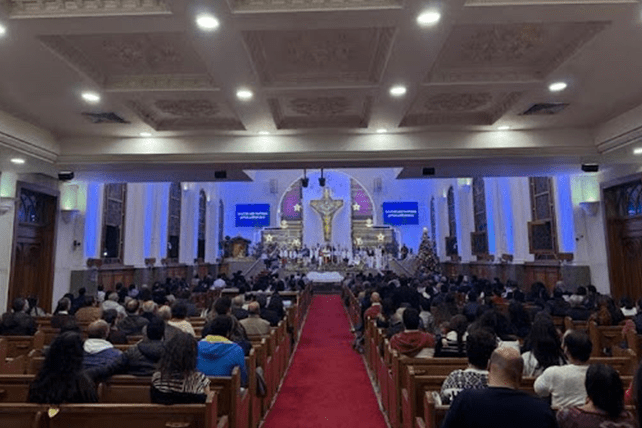
While I was in Egypt last year, a highlight for me was gathering with a number of Egyptian Christians and churches. One of these churches was Heliopolis Evangelical Church, where the church’s lead pastor Youssef Samir invited me to share a message on Jesus’s mission.
Heliopolis is a thriving and vibrant megachurch in Egypt, embedded in the Heliopolis neighborhood of Cairo. This church is a model of contextual, indigenous worship and mission, taking its name from its neighborhood and its evangelical convictions.
To get a sense of the work of this church, it helps to understand the context of both of these things.
The Context of Heliopolis Evangelical Church
As I shared in my reflection on Kasr El Dobara (the largest and most influential evangelical church in the Arabic-speaking world), the ministry and mission of the gospel has unique challenges in the Egyptian context. We see from Scripture that God has been at work in Egypt for millennia, and Egypt’s ancient Orthodox tradition traces its roots back to the early centuries of Christianity. But Christians of all denominations now are a significant minority in a largely Muslim nation, and Egypt’s evangelical congregations grew out of missionary work in the last 200 years.
And yet God has been moving in these churches, with indigenous leaders leading the way on mission. Heliopolis is a powerful example of that growth.
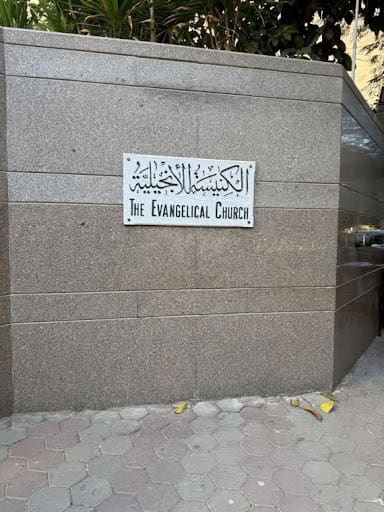
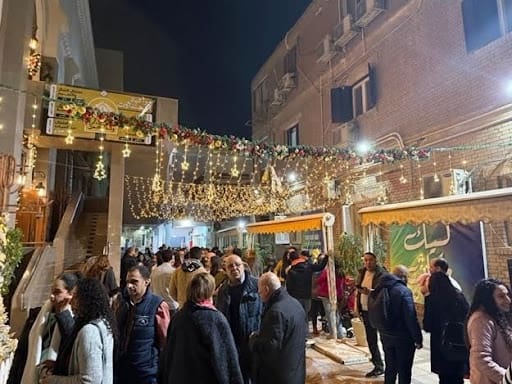
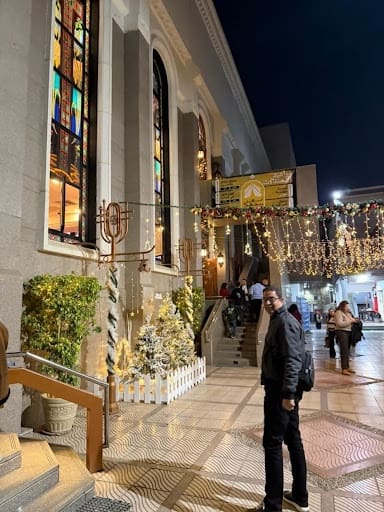
The church is embedded in the neighborhood of Heliopolis in northeastern Cairo. Heliopolis is a unique community, with historic architecture and busy commercial streets. The streets are filled with cafés, families navigating busy sidewalks, and a sense of both ancient and modern life. With neighbors of many backgrounds in this community, the church’s worship and mission have a very textured backdrop. And this backdrop made the experience of worship with the Heliopolis community all the more powerful.
The Contextual Worship and Mission of Heliopolis Evangelical Church
I have visited churches across the globe. Transparently, in those worship services I usually hear familiar songs, with tunes from the American and Australian worship music industry, albeit translated into the local language. There’s nothing wrong with this practice, but it does make it worth pointing out that none of the music at Heliopolis was familiar to me.
Walking into the auditorium, everything felt familiar, while also deeply unfamiliar. At the back of the stage a glowing cross was the center point of the beautiful worship space, which was decorated for Christmas while I was there.
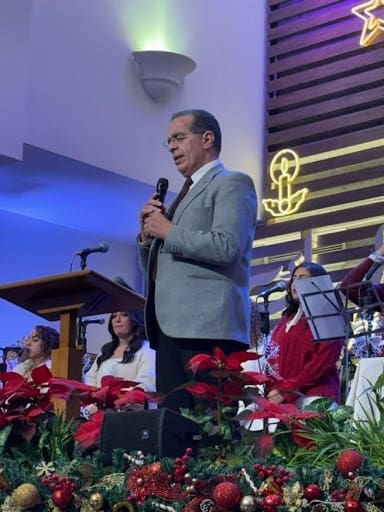
The service felt a little like a blend of a high-energy Gospel choir and a spontaneous Pentecostal worship night, but in a distinctively Middle Eastern tone. A contextual, Arabic style of music was fully embedded into the church’s worship.
In a big difference from the West, Middle Eastern music uses tonal scales called maqam. These scales feature “in-between” micro-tones that sound haunting, mysterious, and even somber to Western ears.
More than a guitar or piano, a key instrument at the church was a qanun, a traditional Middle Eastern stringed instrument. A qanun is played flat on a lap or stand, with its strings facing up, so that the musician can pluck these strings with their fingers. This instrument gave the worship music of Heliopolis Evangelical Church a distinctive sound that felt thoroughly Egyptian.