Maintaining a healthy kidmin environment protects children and their families. But minimizing germs at church has other important benefits for your children’s ministry too. Here are a few not-so-obvious reasons:
- Sick children lead to sick volunteers. Want to minimize sick calls from volunteers on Sunday morning? Hold the line and say no to parents who want to check-in their toddler who clearly isn’t feeling well.
- Protect a great guest experience. You’ve worked hard to create it. Protect that experience by making sure children don’t go home carrying loads of illness-causing germs. As a parent, I remember the times I visited another church and three days later had sick kids at home. And if my kids got sick, I usually told a friend or two.
- Minimize distractions and maximize learning. Sick children need tissues, extra hand washings, and generally need extra attention simply because they don’t feel well. All these factors impact classroom dynamics and, in turn, subtly influence the ability of healthy children to learn.
- Maintain healthy giving. Most churches never look at the economic impact of having sick kids. Like most churches, you may already be feeling a financial pinch. Sick children translate into parents staying home on Sunday to take care of them. And some parents won’t give when they aren’t there…or if they have to pay unexpected medical bills.
8 Ways to Maintain a Healthy KidMin Program
Cold and flu season is coming. Are you prepared?
1. Follow healthy hygiene practices.
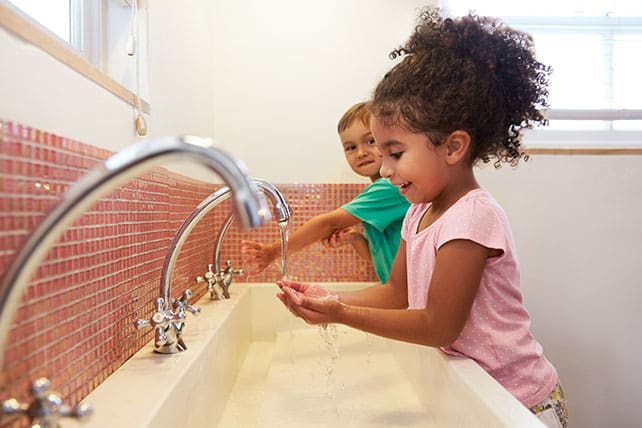
First of all, have children wash their hands or use hand sanitizer when entering the classroom. Encourage them to avoid touching their eyes, nose, and mouth, where germs can easily enter the body.
Remind children to cough or sneeze into a tissue, throw it away, and then wash their hands. Teach them to cough into their sleeve or the inside of their elbow if a tissue isn’t available.
2. Keep surfaces clean.
Supply teachers and volunteers with disinfectant to regularly clean commonly shared surfaces, even if not visibly soiled. Between church services, have them clean common points of contact like counters, tables, and toys.
Don’t forget the small stuff! Light switches, doorknobs, phones, keyboards, and computers are frequent virus hangouts. Some viruses like the flu can survive on objects for two to eight hours, potentially infecting others.
3. Keep sick children at a distance.
Designate your children’s ministry space as a well-child area. Communicate with parents that they should not bring sick children.
4. Send sick children and volunteers home.
Don’t be afraid to uphold your healthy kidmin policy, even when doing so is tough. Sick children need to stay with their parents. And teachers should go home or stay home if they could potentially get others sick.