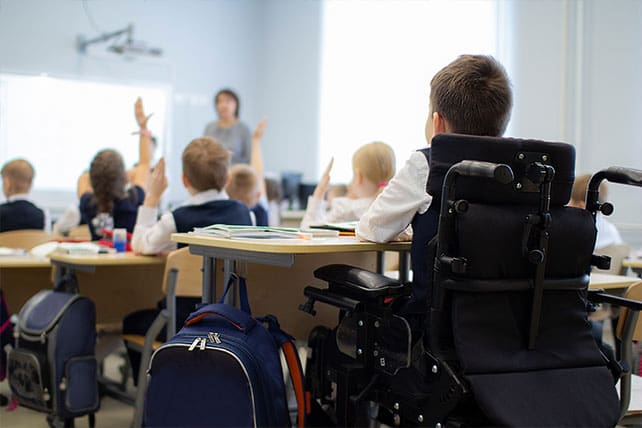
Every part of your kidmin space and program should be accessible. Jesus’ ministry routinely included people with disabilities. People of all abilities can learn, play, and study the Bible together. So consider… How inclusive is your children’s ministry space? What can you do to make sure everyone feels welcome?
We asked Charla Holst, occupational therapist and founder of Overcomer Ministries, how churches can best modify spaces to include people of all abilities. To help your kidmin space be more disability friendly, take the simple quiz below.
Accessibility Evaluation
Consider these four basic stages of disability inclusion. Which one best describes your church?
- Awareness
- Acceptance
- Accommodate
- Appreciate
What is the next step you and your church can take to make your children’s ministry spaces more disability friendly and inclusive? Start with the children God has placed in your life and in your church.
Beginning with a heart and attitude of inclusivity is the first step to making a change. Here are practical steps to consider when moving through each stage:
1. Awareness
First educate volunteers, staff, and the church body about specific disabilities. This helps people gain understanding and empathy and removes fear of the unknown.
2. Acceptance
Next evaluate and prepare your church. Be intentional about accepting people with disabilities. Is your church accessible to people with a variety of special needs? Consider physical accessibility but also teaching methods and attitudes toward attendees. Use the tools in this article to evaluate your ministry.
3. Accommodate
Remove barriers that limit accessibility in all areas and provide accommodation and support. Seek help from professionals as needed, but start with the tools provided in this article. Consider a free consultation for churches from an experienced occupational therapist at Overcomer Ministries.
As you read on, you’ll discover specific questions to evaluate how your church does or can improve at accommodating various disabilities.
4. Appreciate
Use the gifts and talents of everyone in the church. Encourage children to serve using their strengths, and offer support to one another in their weaknesses. Remind both kids and adults that we all have strengths and weaknesses.
Accessible KidMin Space: Look Around
Look around and evaluate your physical space. Consider if it’s conducive to learning for all abilities. Include all types of disabilities, such as…
- Physical disabilities: mobility, coordination
- Cognitive disabilities: thinking, learning, remembering
- Sensory disabilities: vision, hearing, sensory processing
- Communication disabilities: speech, language
- Invisible or hidden disabilities: those not easily observed by others, such as dyslexia, autism, ADHD