One is that Heathcliff marries Edgar Linton’s sister Isabella and physically and emotionally abuses her. Later, Heathcliff forces a marriage between his own son and Catherine’s daughter. He seeks revenge on nearly everyone he believes has wronged him, using manipulation and cruelty to gain power over both the Earnshaw and Linton families.
The book shocked readers at the time of its publication because of the brutality, abuse, and immorality depicted in it. It does not, however, contain graphic sexual content.
The 2026 film adaptation of “Wuthering Heights” from director Emerald Fennell opened in theaters Feb. 13, and according to Box Office Mojo, topped the box office in its debut weekend, grossing $32.8 million domestically over its first three days. The movie is rated R for sexual content, violence, and language. IMDB says the sexual content of the film includes sex scenes and depictions of BDSM, oral sex, and masturbation.
People seem polarized about Emerald Fennell’s interpretation, although that has apparently not stopped the movie from being successful so far. Some are embracing the movie for what it is, while one person who commented on a trailer said, “If you listen really closely, at the end you can hear Emily Bronte screaming from beyond the grave.”
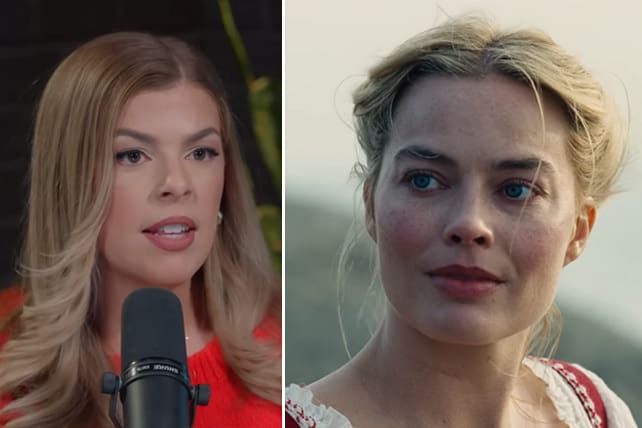
In a Feb. 16 episode of her podcast, “Relatable,” Stuckey shared that she was initially interested to see “Wuthering Heights,” saying, “I’m a sucker for a good romance movie.”
But after she saw trailers for the film, Stuckey realized, “Oh, I feel like this is more like ‘Fifty Shades of Grey’ set in the 19th century.” She played for her audience scenes from the trailers, which depict overtly sensual, erotic visuals. “There is this deep obsession in this storyline, and that is true of the book,” she explained. “It is just hyper-sexualized, it seems like, in the movie.”
Yet despite the toxicity of the characters, the marketing for the movie bills it as “the greatest love story of all time.” One of the taglines is, “Drive me mad.”
Stuckey pointed out that Fennell previously directed “Saltburn,” a “queer-themed psychological thriller.” Stuckey believes Fennell has a “desire to queerify or sexualize or make darker, storylines.” The director has explained the liberties she took with “Wuthering Heights” in part by saying that she made the movie based on the feelings the novel evoked in her as a teenager.
Stuckey also played clips of the actors promoting the film to show that Margot Robbie, who plays Catherine, and Jacob Elordi, who plays Heathcliff, evoked aspects of their characters while marketing it. Elordi (who appeared in “Saltburn”) said he and Robbie had a “mutual obsession” for each other. Robbie, who is married with a child, said that in one scene Elordi made her “weak at the knees.”
“This is all kind of part of a marketing scheme, but it builds this idea in women’s minds that this is the greatest love story ever told,” said Stuckey. “This is what love and romance should look like. And if you think that I’m exaggerating the effect that movies have on women, then you should talk to your friends who read the Colleen Hoover books.”
Colleen Hoover wrote the book “It Ends With Us,” which was adapted into a film starring Blake Lively—and which Stuckey also warned her followers to avoid.
RELATED: ‘Emotional Pornography’—Allie Beth Stuckey Warns Christian Women To Avoid ‘It Ends With Us’