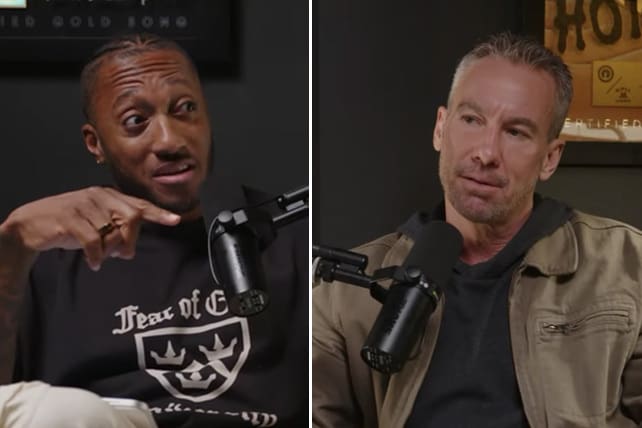
“And so even there, ‘theos’—Paul means Yahweh,” Sprinkle said. “They’re hearing, you know, Zeus and…he meets them where they’re at, trying to steer them away from…Zeus.”
“I don’t want to get too lost in the weeds, but language can be complex,” said Sprinkle. “So, in many cases, I will use someone’s pronouns as a way of meeting them where they’re at, not because I agree with it.”
“Now, if someone says, ‘Ok, I’m male, but my gender identity is female, and my pronouns match my gender identity,’” he added, “like, ok, I don’t really agree with all that, but ok, that’s where you’re at. I’ll use your pronoun.”
“If they said, ‘Well, do you agree that I’m actually female?’” said Sprinkle, “I would say, ‘No, I don’t. I don’t.’ Now, in most cases, if a Christian is using someone’s preferred pronoun, they’re just kind of blown away that a Christian would do that because most Christians are just kind of more hostile and, you know, demeaning and stuff.”
“I think oftentimes we feel as if our faith is on the line in certain circumstances,” Lecrae observed. “And I like the gray areas, right? And I think that’s why people tune in because they navigate gray areas in real time.”
RELATED: Critics Push Back on SBC’s ‘Road to Orlando’ Feature of David Uth Over LGBTQ+ Ministry Stance
“I’m navigating this in real time,” he said. “I’m talking to my son as he’s going to L.A. and he has to navigate this. And you know, similarly, I would say like, if someone [said], ‘I was born John, but now I’m Kate,’ are you going to call him John?”
“I don’t think most people would if you cornered them,” said Lecrae. “So I do think that’s an interesting gray area.”