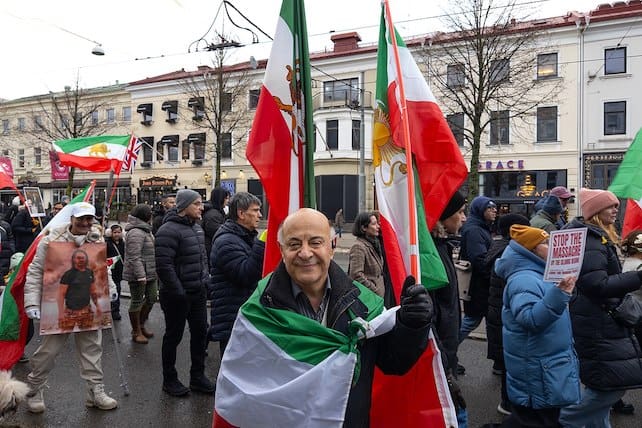
“It’s very important to separate the regime of Iran from the people,” said Eric Demeter, who ministers to Iranian refugees in Athens, Greece. ChurchLeaders spoke to Demeter to get his thoughts on the current conflict with Iran, Israel, and the U.S. in light of Demeter’s experience working with Iranians who have left their country.
“There is a revival now going on among the Iranians. Many of them are coming to faith,” Demeter said in response to the question of what he thinks American Christians need to keep in mind, and in their prayers, in regard to the Iran conflict.
“They will need our support,” he said. “They will need our prayers. They will need discipleship. So keep praying for them that more would come to Christ.”
Demeter said that most Iranians who fled to Greece love the United States, have a favorable view of President Trump, and “want to be part of the Western world. They have a shared history with Israel,” he said, “and much of what you see on the news is the government paying people to burn American and Israeli flags.”
“The American people need to know that the Iranians want to be our friends,” said Demeter. “The harvest is plentiful now. And if this regime truly falls, Iran is going to be a huge mission field.”
Background: The Current Iran Conflict
On Feb. 28, the United States and Israel launched a joint attack on Iranian military bases, missile infrastructure, and nuclear-related facilities. Officials said the strikes were intended to degrade Iran’s military capabilities and prevent the country from developing nuclear weapons. Some U.S. officials have also suggested the operation could weaken or potentially topple Iran’s regime, which is an Islamic theocracy.
Supreme Leader Ayatollah Ali Khamenei, along with other senior Iranian officials, has been killed. Iran retaliated with missile and drone attacks on Israel, including strikes toward Jerusalem, and on U.S. military bases in several Gulf states. Hezbollah, the Iran-aligned militant group based in Lebanon, also launched attacks on Israel, prompting Israel to retaliate.
The current confrontation reflects a long-running regional struggle between Iran and Israel that has largely been fought through proxies and covert operations. The conflict follows Israel’s and later the United States’ June 2025 attacks on Iran’s nuclear facilities.
Protests that began in Iran in late 2025 spread to multiple cities and were met with a violent crackdown by Iranian security forces, including mass arrests, internet shutdowns, and deadly confrontations with demonstrators. TIME magazine reported that as many as 30,000 people might have died in the protests. Iran International found that number to be over 36,500.
“It's very important to separate the regime of Iran from the people,” said Eric Demeter, who ministers to Iranian refugees in Athens, Greece.Click to Post