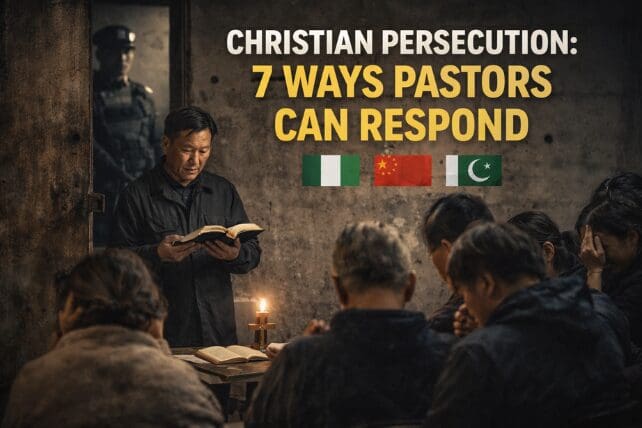
Somewhere right now, a pastor is quietly leading worship. He doesn’t have a sound system, a bulletin, or a church sign out front. He’s in a borrowed living room with a well-worn Bible and congregants who know the risk of showing up. If someone knocks on the door mid-sermon, everyone freezes…because that knock might not be a friendly neighbor.
Around the world, millions of Christians risk their freedom and lives to worship Jesus. But as busy church leaders in the West, it can be tempting to treat the persecuted church as a distant prayer concern. After all, we face our own personal, social, and congregational crises.
At church, we occasionally mention global concerns and even donate some money. Then we return to our own tasks and challenges. But Scripture won’t let us stay comfortable. “If one part suffers, every part suffers with it,” Paul writes about the body of Christ (1 Corinthians 12:26).
Based on news accounts, our Christian brothers and sisters throughout the world are clearly suffering. How can we faithfully respond to all that global persecution? Pastors can’t end the problem, but we can help our church members view themselves as part of the solution.
Global Persecution of Christians: A Closer Look
According to the annual World Watch List from Open Doors, more than 388 million Christians worldwide face high levels of persecution or discrimination. That’s an astonishing 1 in 7 believers globally. Forms of persecution vary from violence and imprisonment to job loss, surveillance, forced displacement, and social exclusion.
Highly affected regions include:
- Nigeria and Sub-Saharan Africa—Nigeria may be the most dangerous place in the world to be a Christian right now. Radical Islamist groups, including Boko Haram and armed Fulani militants, have burned churches and killed thousands. Pastors are targeted. Widows, orphans, and displaced families fill refugee camps. Similar threats exist across the region, as do incredible faith testimonies.
- China—Here the persecution is more systematic. The government surveils, raids, and shuts down unregistered “house churches.” Officials remove crosses from buildings and detain pastors. The Chinese government promotes a state-approved version of Christianity, emphasizing loyalty to the Communist Party. Yet the church in China continues to grow, like the Early Church in Acts.
- The Middle East and Asia—Conversion from Islam to Christianity remains grounds for honor killings, imprisonment, or exile. In countries like Pakistan and India, Christians face violent mobs and fabricated blasphemy charges. North Korea executes Christians or sends them to forced labor camps.
- The West—U.S. Christians rarely face martyrdom, yet they increasingly face ridicule. Students are shamed for referencing the Bible, employees fear retaliation, and churches endure vandalism, zoning disputes, and public hostility. From the global church, Americans can learn how to handle these pressures.
What Persecution Looks Like
Persecution shouldn’t be a surprise to followers of Jesus. The Bible warns, “Everyone who wants to live a godly life in Christ Jesus will be persecuted” (2 Timothy 3:12).
Overt persecution includes murder, church bombings, arson, arrest, torture, imprisonment, displacement, and forced conversion. These are most common in regions dominated by extremist ideologies or totalitarian governments.
Systemic persecution rarely involves violence. Rather, think of laws that restrict worship, evangelism, or conversion; government surveillance and harassment; and denial of education, employment, or healthcare.
Cultural hostility includes mockery, pressures, and legal challenges to religious expression. The goal of systemic oppression is to silence Christians, making faith too costly to live out publicly.