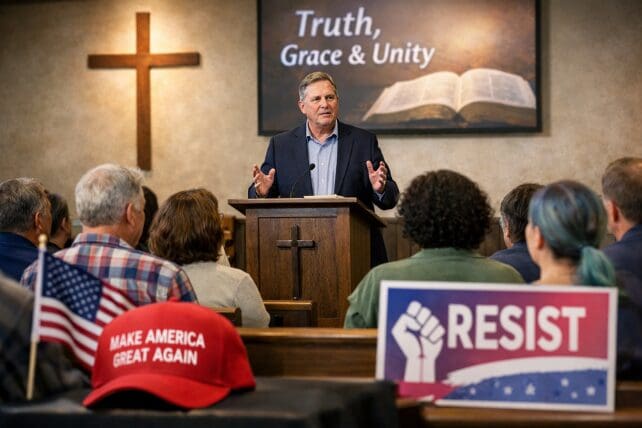
Picture this: You preach on caring for the poor. After the service, a longtime deacon named Harold corners you in the hallway by the coffee table. “That sounded pretty liberal,” he says, and walks away. Next Sunday, a young couple stops you at the door. “We love that you’re speaking up about justice,” they say. “We’ve been looking for a church that actually cares.”
Same sermon. Opposite reactions. Welcome to ministry in a culture war. This isn’t a guide for making everyone happy—that’s not possible, and chasing it will hollow out your ministry. It’s something harder and better than that. Jesus calls his church to rise above worldly divisions, uniting in his truth. Understanding America’s culture wars isn’t optional for pastors—it’s essential.
The Impact of Culture Wars
“Culture wars” aren’t simple disagreements. They’re societal conflicts about strongly held moral, social, and political values. They reflect competing visions for what is right, good, and true. From a big-picture perspective, they argue different paths for the country to follow.
Why the uptick in culture wars in the 21st century? Widespread use of social media increases political polarization. These platforms pour gasoline onto hot topics, hurting people’s feelings and harming their relationships. Social media rewards outrage, punishes nuance, and trains people to see everyone on the other side as either ignorant or malicious.
Your congregants often spend hours each week absorbing culture-war content online. Then they show up on Sunday expecting you to speak into it. Church members who agree on the authority of Scripture differ widely in how they think biblical principles should shape public policy.
Some Christians believe the church should speak boldly about injustice and advocate for social change. Others fear that adopting secular frameworks compromises biblical authority. Pastors and churches must “act justly” (Micah 6:8) while prioritizing Scripture over politics.
Unfortunately, cultural conflicts can lead to hatred and violence. Deep divisions in American culture were evident after the September 2025 assassination of Charlie Kirk. The founder of Turning Point USA attracted supporters as well as opponents through his conservative activism. Kirk’s assassination intensified debates about political extremism and growing hostility in public discourse. It also forced Christians to consider how to model civil conversation on hot topics. In a divided society, what does it mean to be ambassadors of Christ?
7 Issues Behind America’s Culture Wars
Several major topics fuel cultural conflict in America and affect church members personally. You’ve likely encountered some or all of these debates:
1. Same-Sex Marriage
Since its nationwide legalization in 2015, same-sex marriage has remained a defining cultural issue. Many traditional Christians believe that the Bible defines marriage as a union between one man and one woman. Progressive voices that support LGBTQ+ equality continue to advocate for inclusion. Pastors face difficult conversations when people’s convictions and expectations clash with a church’s teachings about marriage and homosexuality.
2. Abortion
For decades, abortion policy has divided many Americans. After the Supreme Court overturned Roe v. Wade in 2022, abortion laws returned largely to the states. Many Christians say defending the unborn is a moral imperative based on biblical teachings about human life (Psalm 139:13-16). Other Americans value reproductive rights and personal autonomy. Pastors must minister to people on all sides of the issue.
3. Gender Identity
Gender identity and trans rights represent a major culture war. The debate affects schools, sports, healthcare, and government policy. Some Christians emphasize that God created humans as “male and female” (Genesis 1:27). Others fight for recognition and rights for transgender individuals.