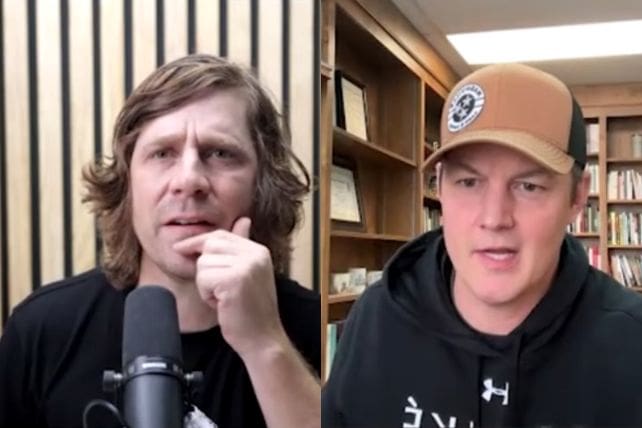
He pointed out that someone who is single and divorced is in a different circumstance than a “28-year-old person who’s never been married.” He suggested believers spend time “just asking the sort of gentle, open-ended questions that allow them to share what they want to.” That posture conveys that people are interested and available to listen but are not trying to pry.
“Some people will take a long time to warm up and share their heart,” he said. “And others are waiting for it and they’re like, ‘Thank God somebody asked. Let me unload some of this stuff.’ So I think that’s one thing that Christians can continue to get better at.”
Something else that Piper believes the church can improve on is “when the church teaches on marriage, to do so, not with 72 caveats, but just an acknowledgment that almost everybody in the room has been affected by divorce…we are one to two degrees of separation from divorce, kind of across the board.
The Christian view that marriage is a picture of the gospel is important. “The Bible ends with a wedding feast. That’s the point,” Piper said. “It’s Christ and his people. Divorce does not forfeit access to that. And so that really matters. A divorced person needs to understand that marriage points to that. You are in that. If you are a believer, you are part of the bride of Christ.”
Piper encouraged church leaders to teach about marriage in a way that does not increase the shame of people who are divorced. It is also important to cultivate “a culture and an atmosphere in your church that welcomes the broken person.”
“Divorce is one means of brokenness,” he said. “But there are so many. There’s loneliness. There’s depression. There’s shame because of sin.”
“How has divorce and remarriage shaped you?” Heppner asked Piper.
Piper replied that those experiences have taught him “some of the complexities and depth of the sovereignty of God” that silences us like Job.
“So often how God works is to take things that never should have happened that we wish had never happened and turn them into something that we would not trade for anything,” Piper said. “And there is no sorting that out. Which means that you don’t get to live with regret, but also you are dealing with pain.”
“I wouldn’t trade any of this for anything,” he said. “And if you start pulling on the threads of regret, you end up losing out on redemption, things that God did to redeem.”
“So you take all of that and you just go, as a pastor now, what does that mean for how God might redeem others, how he might make a way out of what is the worst situation?” said Piper. “And I’ve been able to look people in the face and go, ‘I have every reason for confidence that if you cling to the Lord, you will one day have a story that you can’t even imagine.’”
“I’m not going to put words in God’s mouth,” said the pastor, “but that’s how he does. And the cross is the model for that, right? Because you have the thing that above all things else should never have happened.”
“If that’s the model and we’re walking with Christ, there’s reason to believe that there are small-scale redemptions constantly,” Piper said. “So that has opened up my heart in terms of gratitude, in terms of compassion, in terms of hope for other people.”
“I want to be careful not to spin everything into a ‘happily ever after’ because pain is real,” he said. “But Christ is greater.”