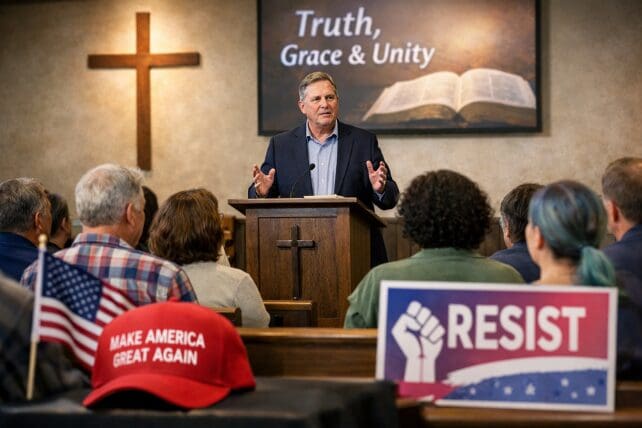
While discussing these topics, church leaders should uphold biblical truth while treating all people with dignity and compassion. Ask: How can I combine my conviction with enough love that the people who most need to hear the message won’t walk out the door first?
RELATED: When the Cultural Climate Gets Political, How Does the Church Stay Missional?
4. DEI Initiatives
Depending on which party holds the presidency, Diversity, Equity, and Inclusion (DEI) initiatives are either widely adopted or wiped away. These practices have huge effects at universities, corporations, and government agencies. Supporters say DEI programs help correct historical inequalities and create opportunities for marginalized groups. Critics of “identity politics” say DEI deepens division and suppresses dissent. Pastors can help churchgoers wrestle with how scriptural teachings on justice and unity mesh with modern-day approaches to diversity.
“Woke” is one of the most controversial words these days. Originally, the term referred to being aware of social injustice, especially regarding race. But it has evolved into a political lightning rod. Critics argue that woke ideology promotes identity politics, suppresses dissent, and pressures institutions to adopt certain social or political stances. Supporters say people must be aware of systemic injustice in order to feel compassion and to pursue equity and social reform.
5. Immigration Policy & Enforcement
Recent policy debates and anti-ICE protests have heightened debate about immigration and immigration enforcement. Some Christians take a stand for secure borders and the rule of law. Others focus on humanitarian concerns and on welcoming migrants who seek refuge or opportunity. The Bible speaks about caring for foreigners but also emphasizes order, justice, and obeying authorities. Your congregation might include immigrants, refugees, and longtime residents with differing views on this topic.
6. Climate Policy
Environmental stewardship is another battleground. Some Christians want sweeping climate policies and preservation. Others question the scientific validity of climate change. For Christians, the conversation often turns to being stewards of God’s creation. But believers may disagree strongly about how best to fulfill that responsibility.
7. Public Health
The COVID-19 pandemic created tensions about vaccines, public health mandates, and religious and personal liberty. Some people focused on collective responsibility and trust in medical and scientific guidance. Others prioritized individual freedom and were skeptical about government mandates. The pandemic revealed how quickly cultural disagreements can spill into church life. Faith leaders, churchgoers, and politicians debated safety protocols, worship restrictions, and vaccine decisions.
A Hard Truth
On some of these issues, faithfulness to Scripture will cost you congregants. Not might. Will. Some members will leave because you’re “too political.” Others will accuse you of not being political enough. Some will leave because you held a biblical line they didn’t want held. Others will leave because you held it without enough grace.
RELATED: Woke War: How Social Justice and CRT Became Heresy for Evangelicals
Most advice on culture wars promises that if you handle things skillfully enough, you can keep everyone at church. That’s a lie. Jesus didn’t keep everyone. The prophets did not keep everyone. Paul planted churches that immediately started fracturing. The goal is not a full room. The goal is a faithful one.